Quadricycle-in-a-bag (2018)
personal significance & density: SMALL
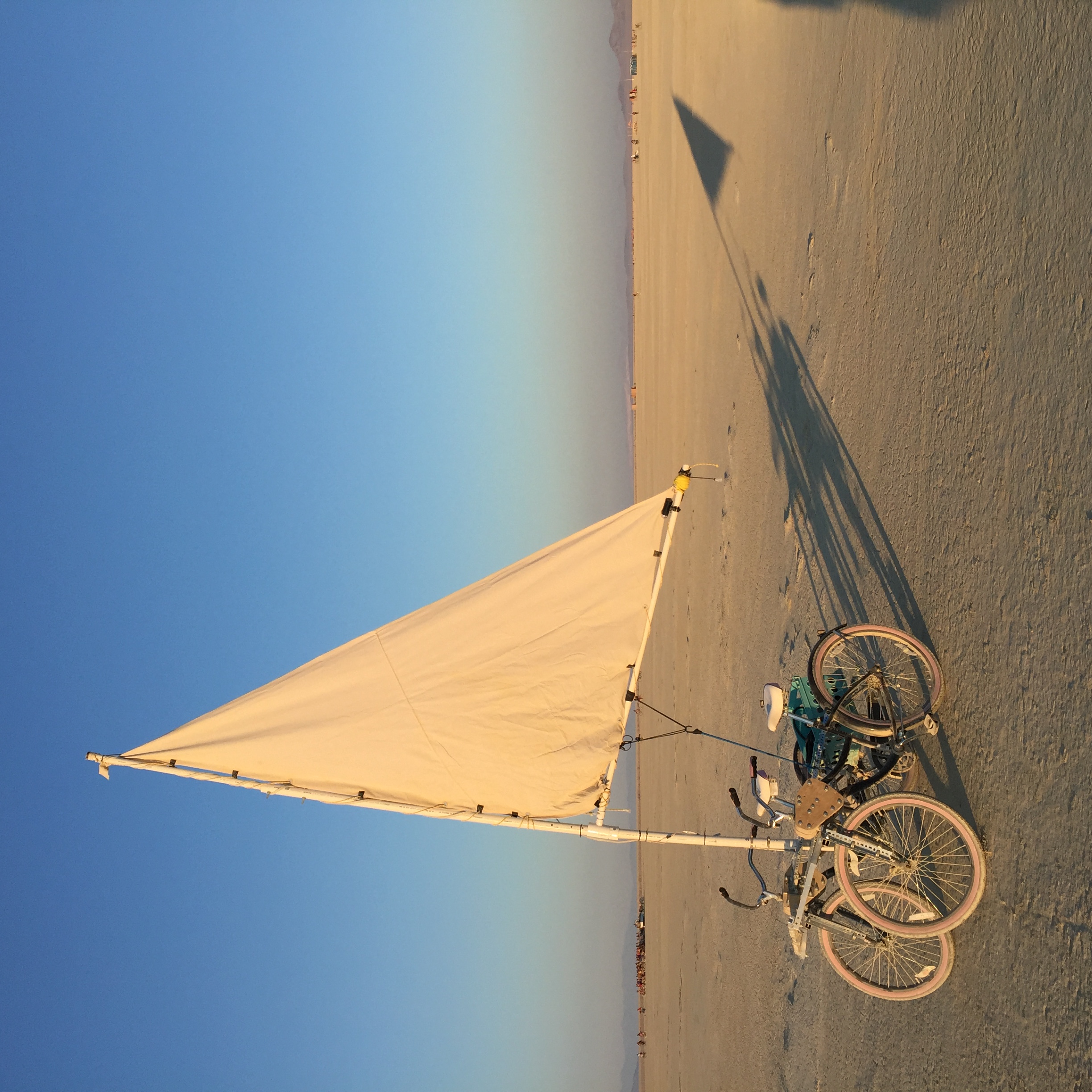
The Quadricycle-in-a-bag was a personal project to bring a wind-powered side-by-side tandem bike to Burning Man in 2018.
Collaboration with Melanie Hoff.
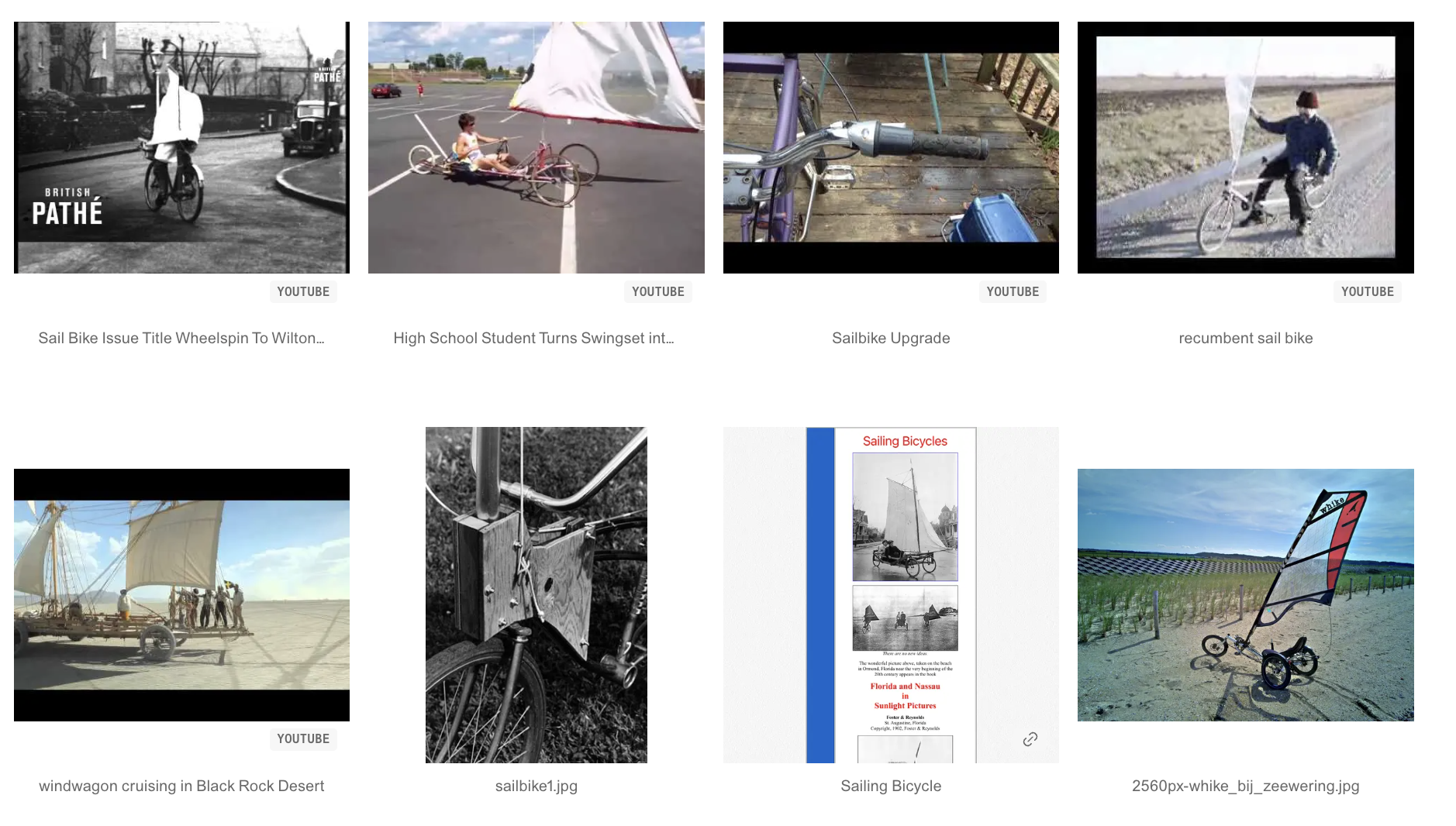
After riding on my friend Elizabeth Henaff's sailboat, I started dreaming about wind-powered bicycles, and collected them in an Are.na channel:
https://www.are.na/dan-taeyoung/wind-powered-bicycles
And also stumbled across https://www.instructables.com/The-Sail-Bike-a-two-person-sailing-bicycle/.
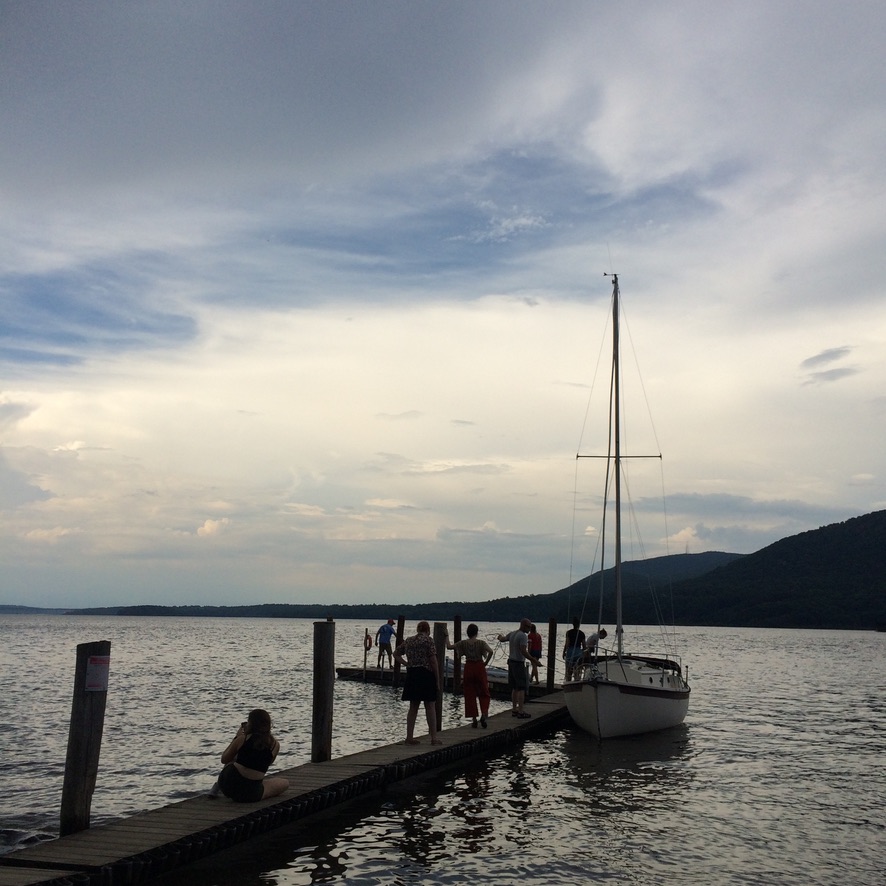
We started on the project when it was too late to ship something to Burning Man directly via the NYC Container, so we decided to utilize the modularity of global supply chains and build the infrastructure around two cruiser bicycles sold at Walmart.
We would then disassemble the bicycle parts,
Fly with all the parts to California (Sacramento)
Repurchase the same two cruiser bicycles
And assemble the parts there.
Hence, quadricycle-in-a-bag.
This meant that nothing could be welded to the bicycle; everything had to be screwed or bolted. It also mean that all of the hardware had to be less than 50 lbs, since we were going to fly with it! Given that lashing two bicycles together creates a lot of different forces on different parts of the bicycle, this was a minor engineering challenge.
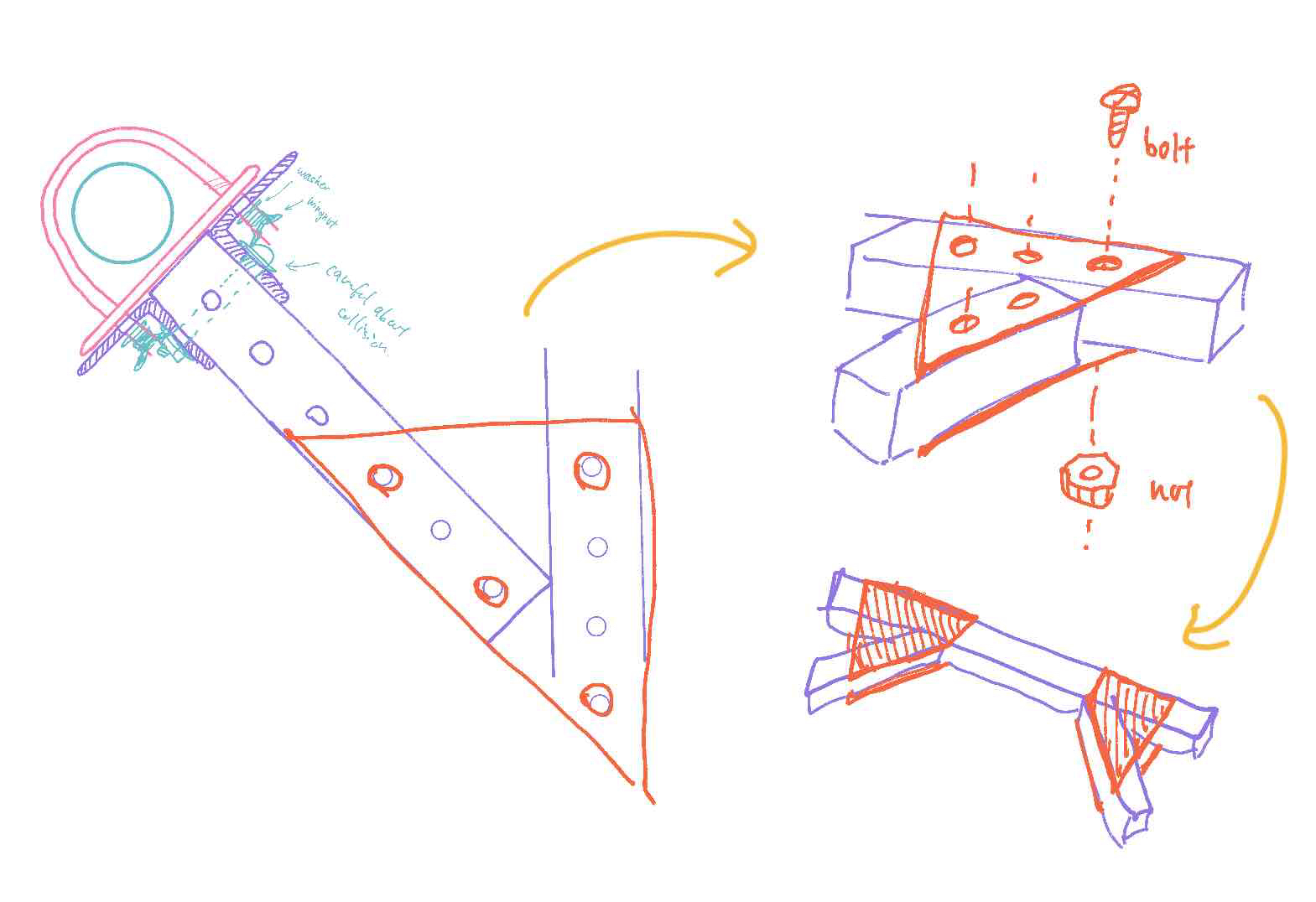
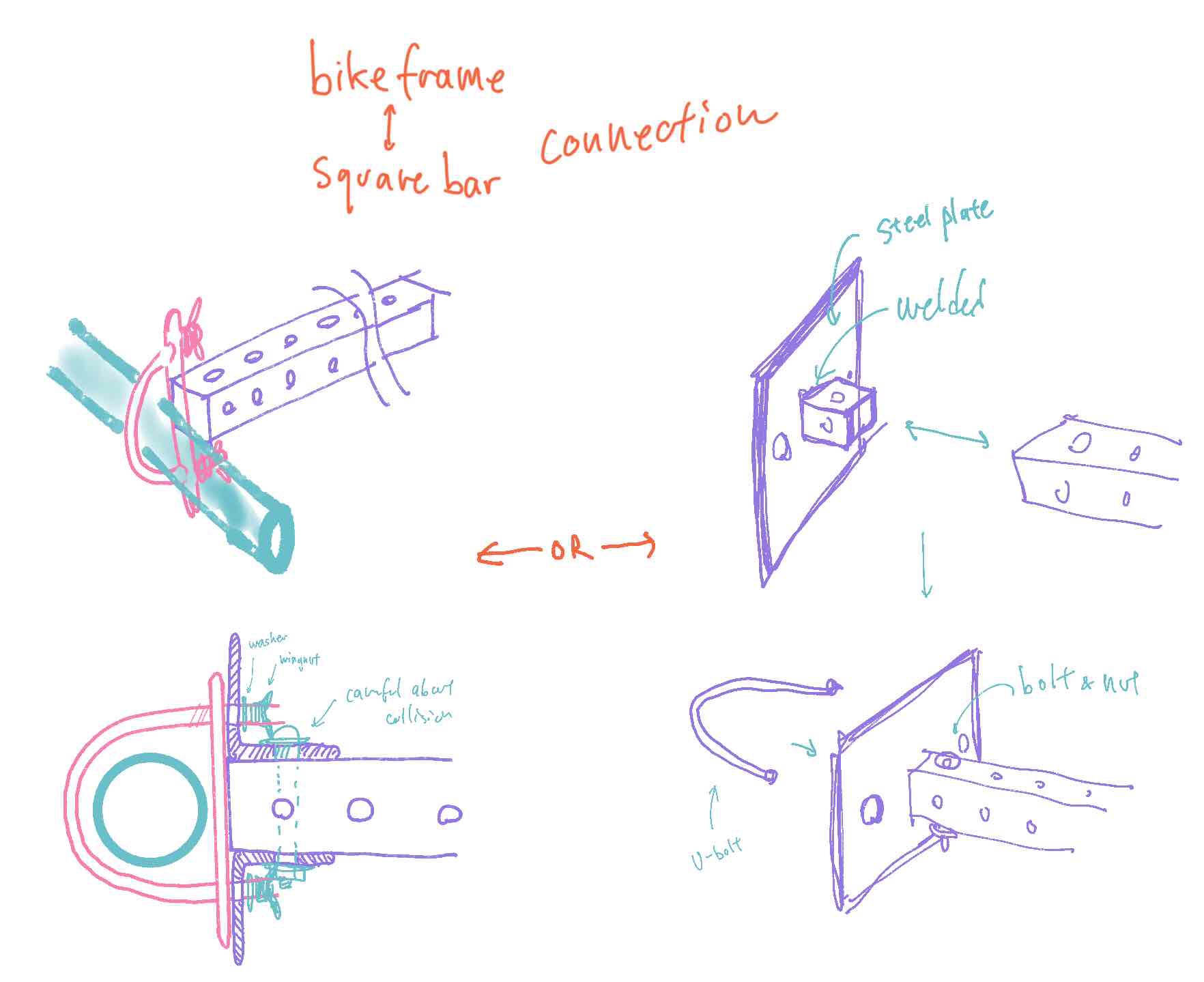
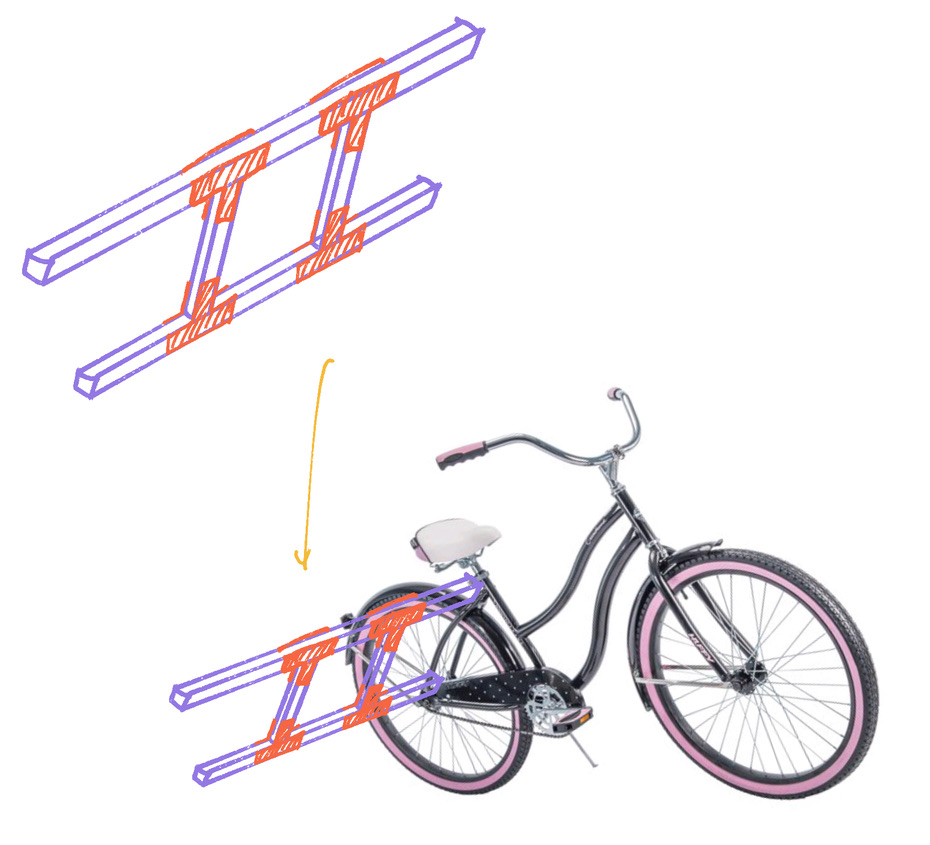
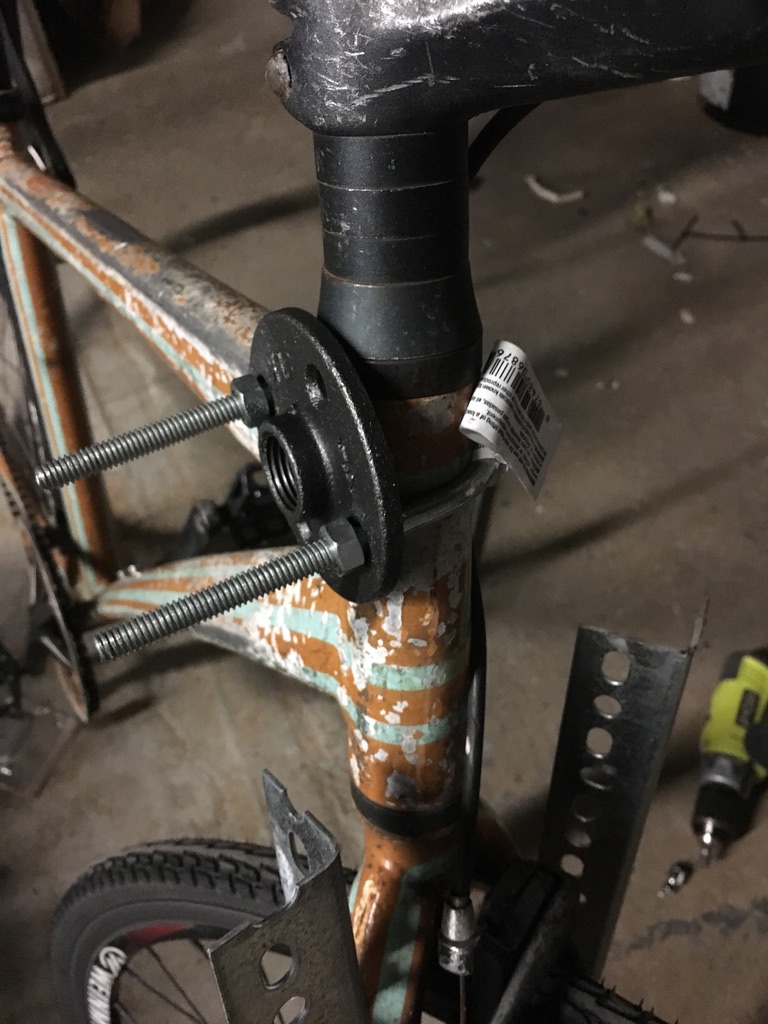
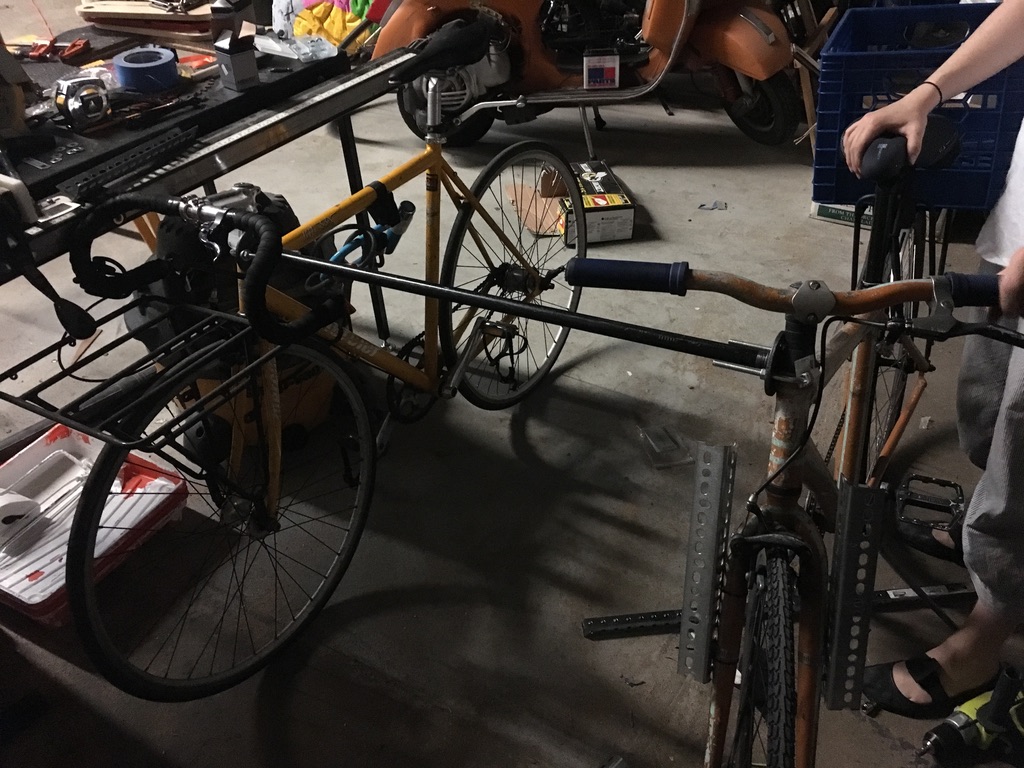
Ultimately, the answer was to create wooden 'clamps' that would clamp on to the headtube/top tube/downtube area; the size of these clamps meant that it would resist moment forces. If we knew how to weld, then welding metal clamps might have been more elegant ... but as it turns out later, it was a good thing that these clamps were made of wood.
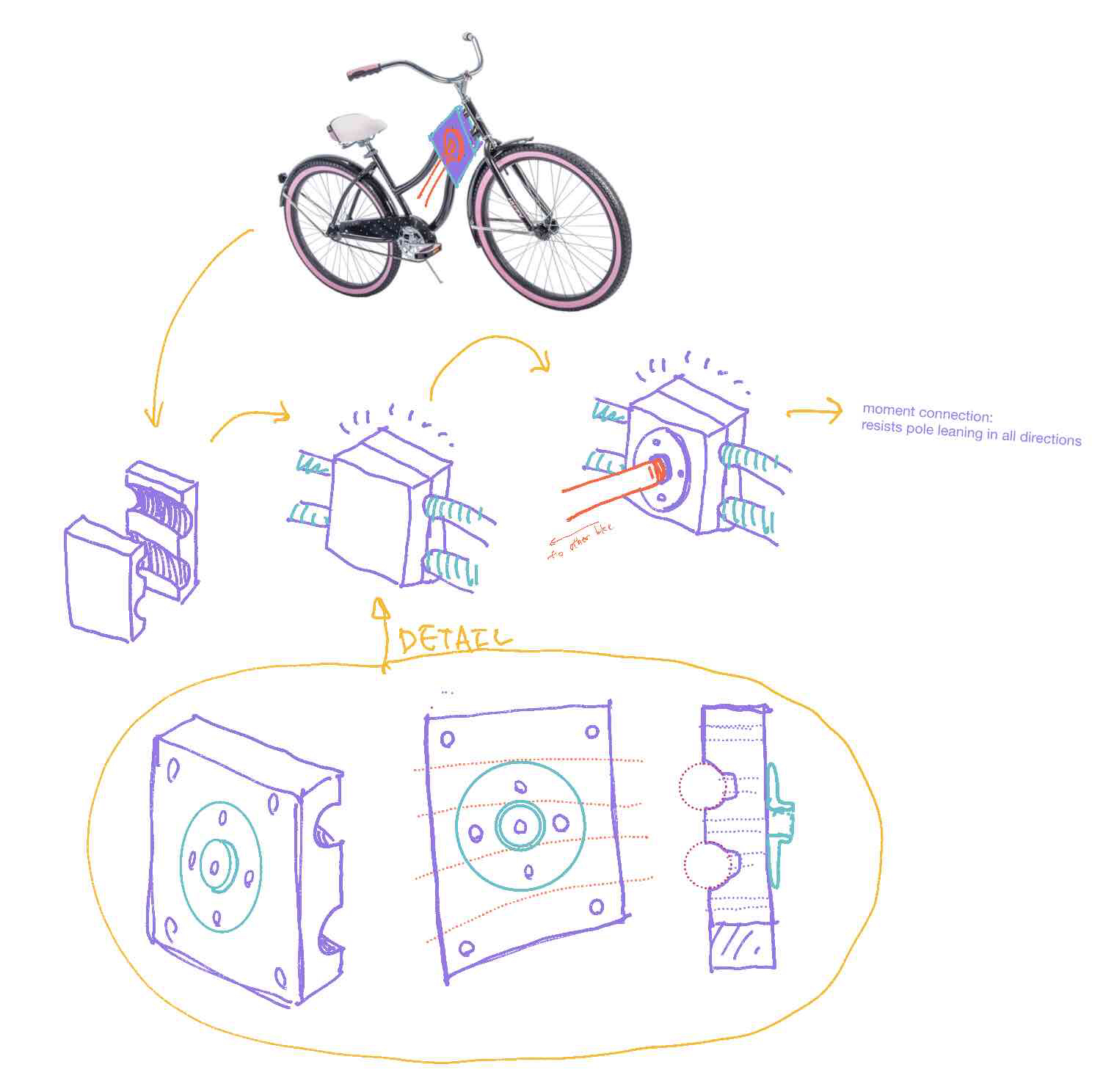
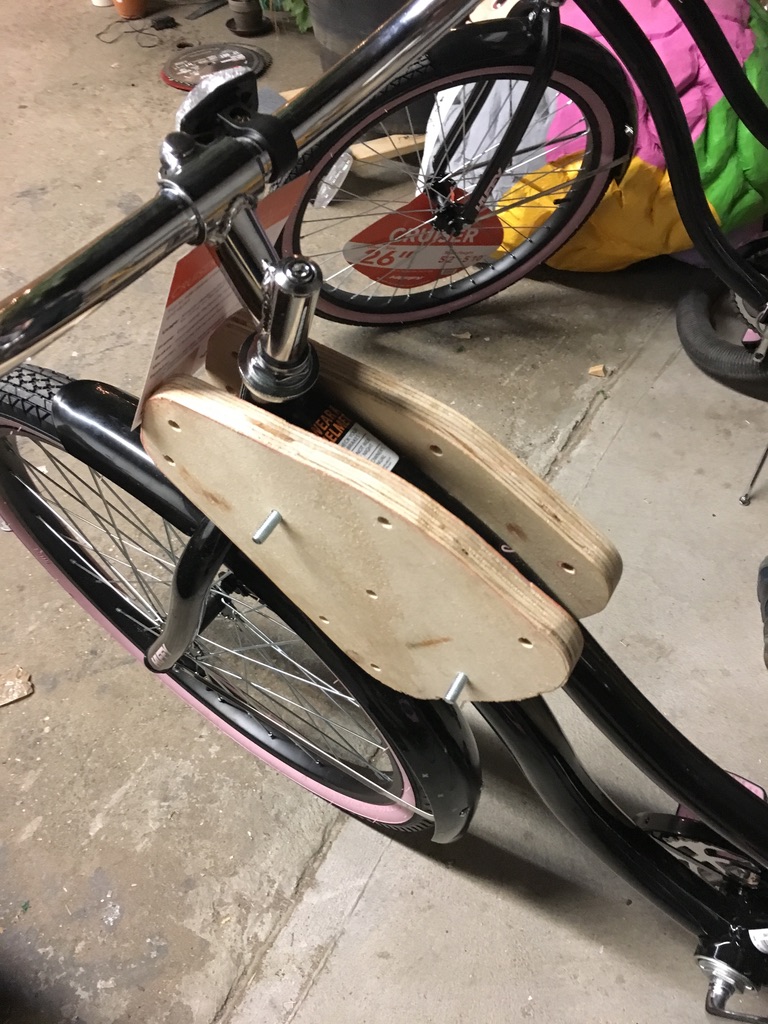
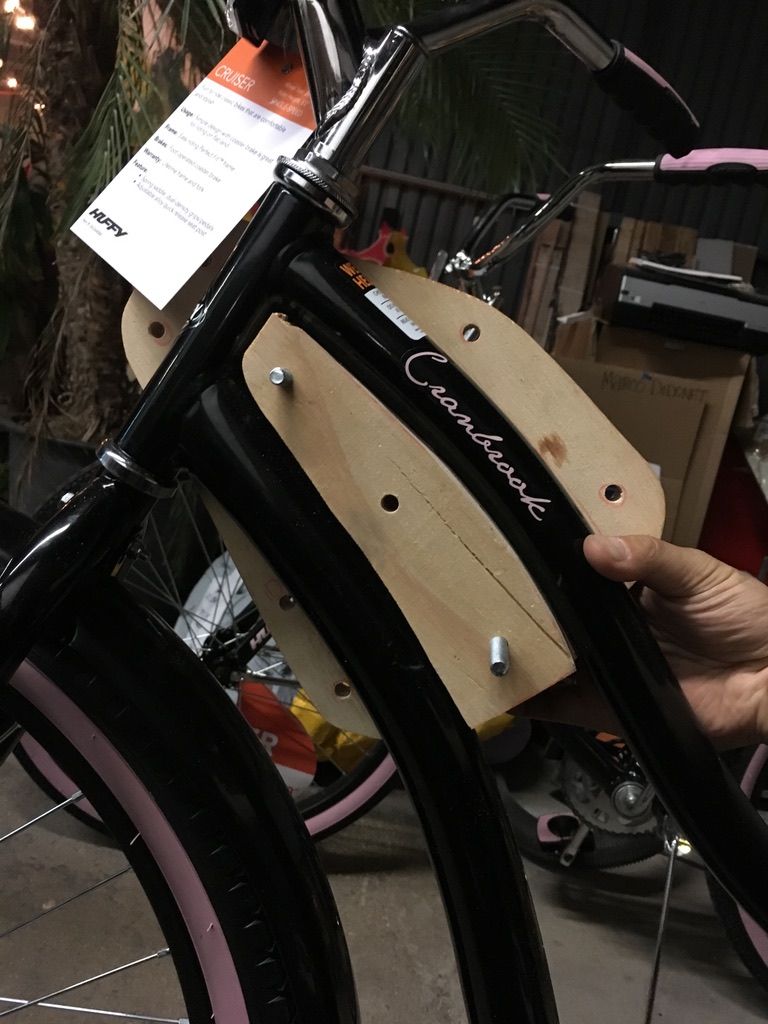
Various different hardware / steel bars would then be mounted to the wood clamps to bridge the two bicycles.
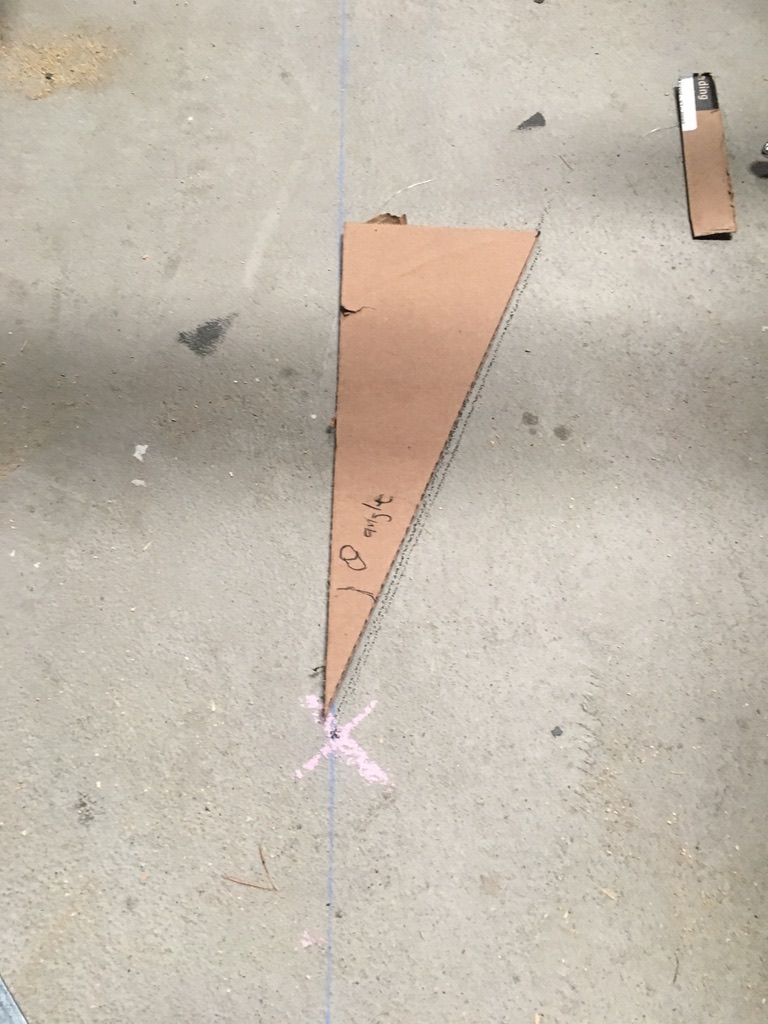
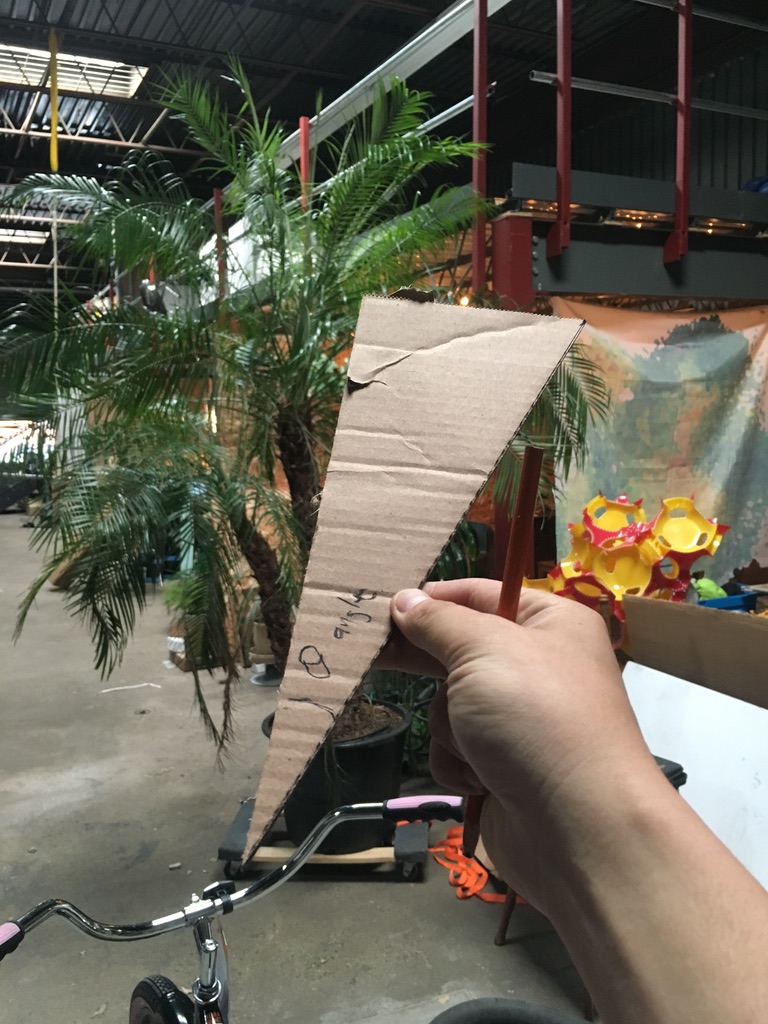
Ackerman steering was used; here we are, sketching out the geometry of the linkage bars.
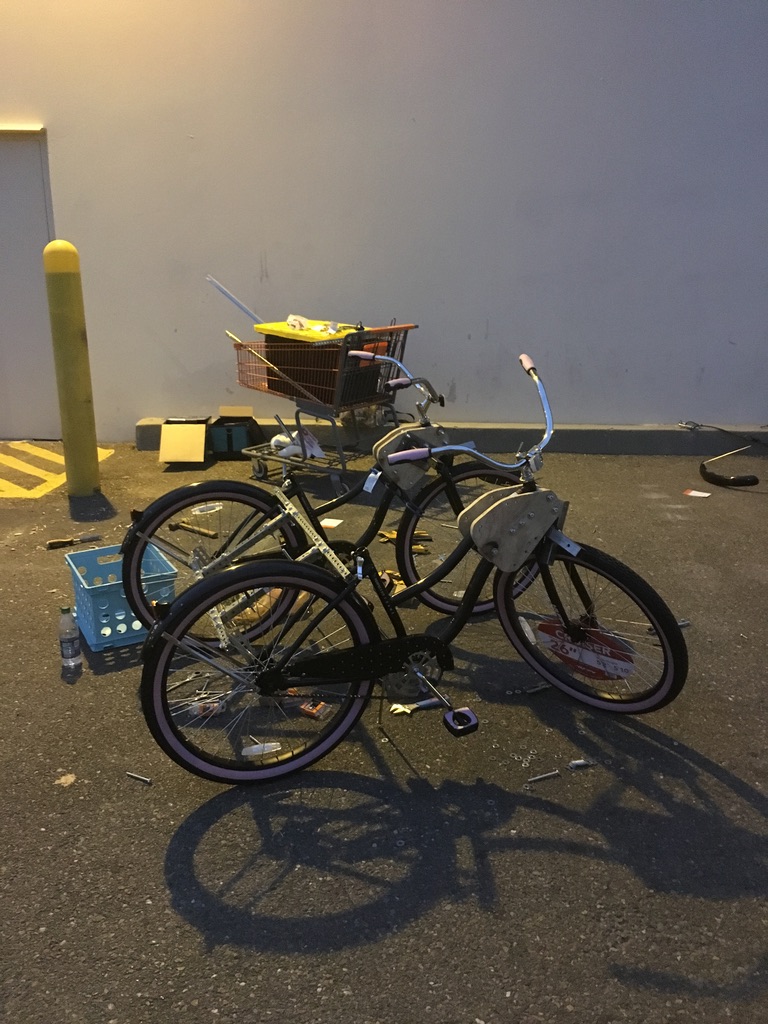
Once the bicycle was assembled in NYC, we disassembled the quadricycle parts, flew to Sacramento, purchased the same bicycles, and re-assembled them in a Home Depot parking lot.
It turned out to that, to our surprise, the geometry of the bicycles (despite being ostensibly the same brand, make, and model) was slightly different. The downtube and top tube were closer together! We had to chisel some of the wood off of the wooden 'clamps' for the west coast bicycles to fit; it was fortunate that the clamps were made of wood.
(It turns out that if you're working on a strange enough project, and friendly enough, the parking lot of a Home Depot isn't such a bad place to work on a project. We had to run in several times to get small tools; the workers allowed us to plug in and borrow some drills and use their electricity.)
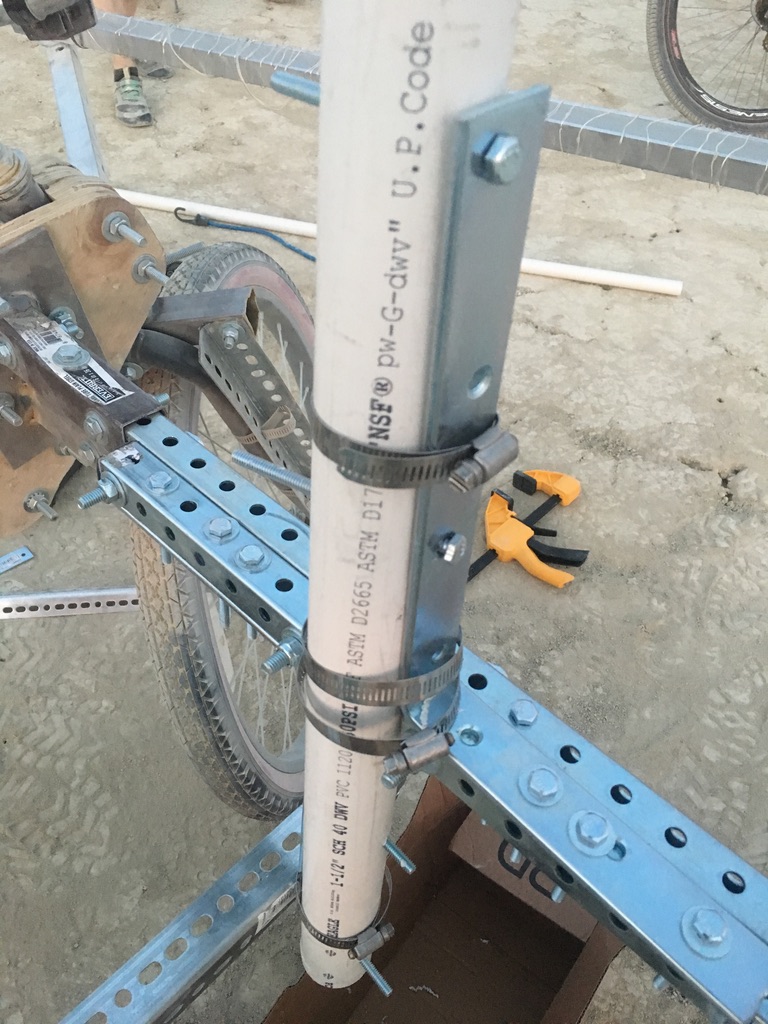
We were running out of time, so we finished the bulk of the work and drove into Black Rock City the next morning, and assembled the bicycle at our camp. This also meant installing a makeshift mast; we had ran out of time and energy in Sacramento, so we hastily put together pipe clamps, some angles, and a PVC pipe for a mast.
If I recall, a playa art car repair camp was across the street, so we borrowed some tools to finish this sail.
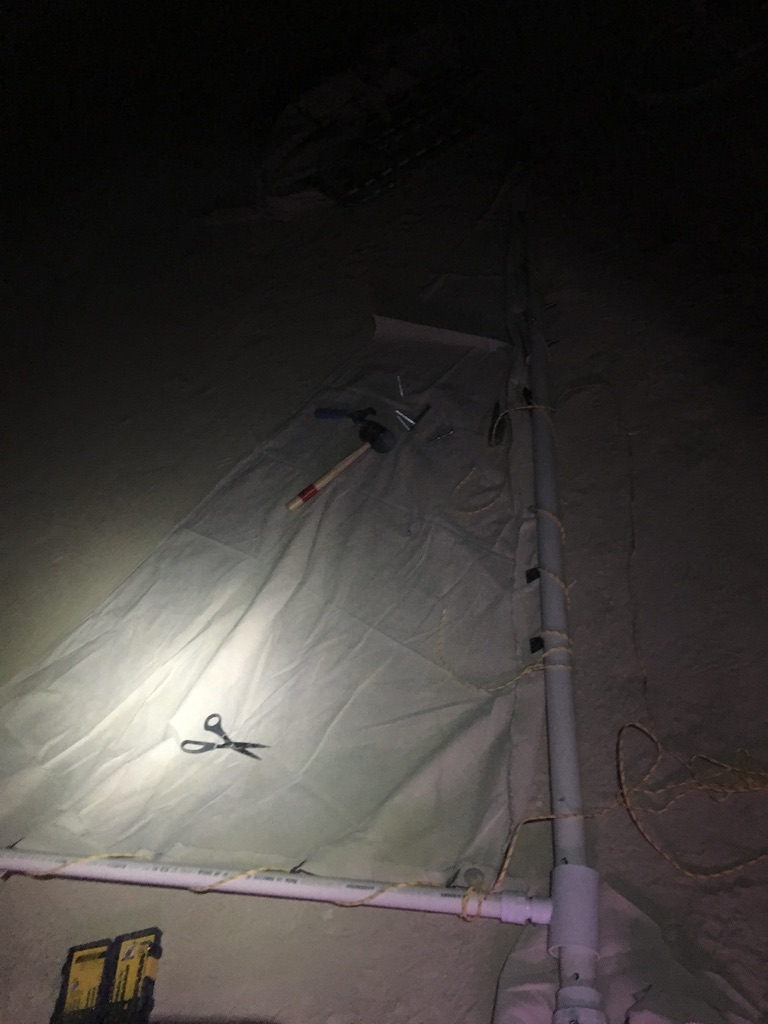
We also cut the sail out of a canvas dropcloth on the playa at night. In retrospect, this is perhaps my biggest regret -- I was tired and sleep-deprived, knew nothing about sailing at the time (I still don't), including sail geometry, and cut the sail as if it was a flat triangle. This meant that it did not bulge out, or had no camber, which meant that it was very difficult to tack or use as a foil/wing.
We also lit the mast with some LEDs and zipties!
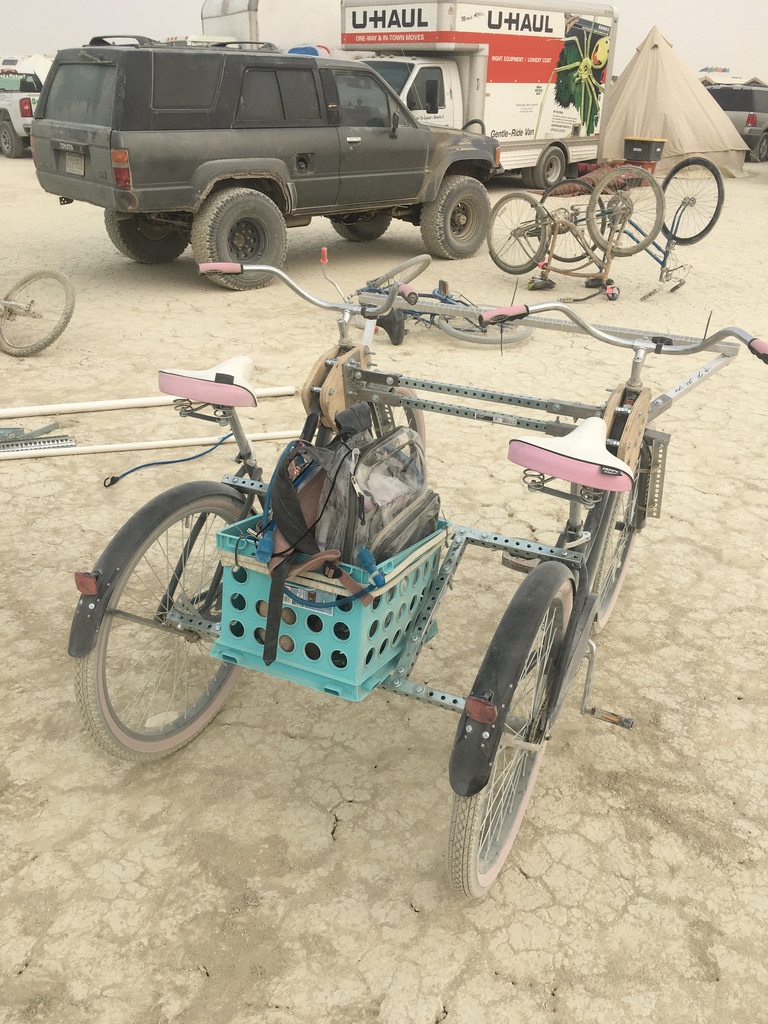
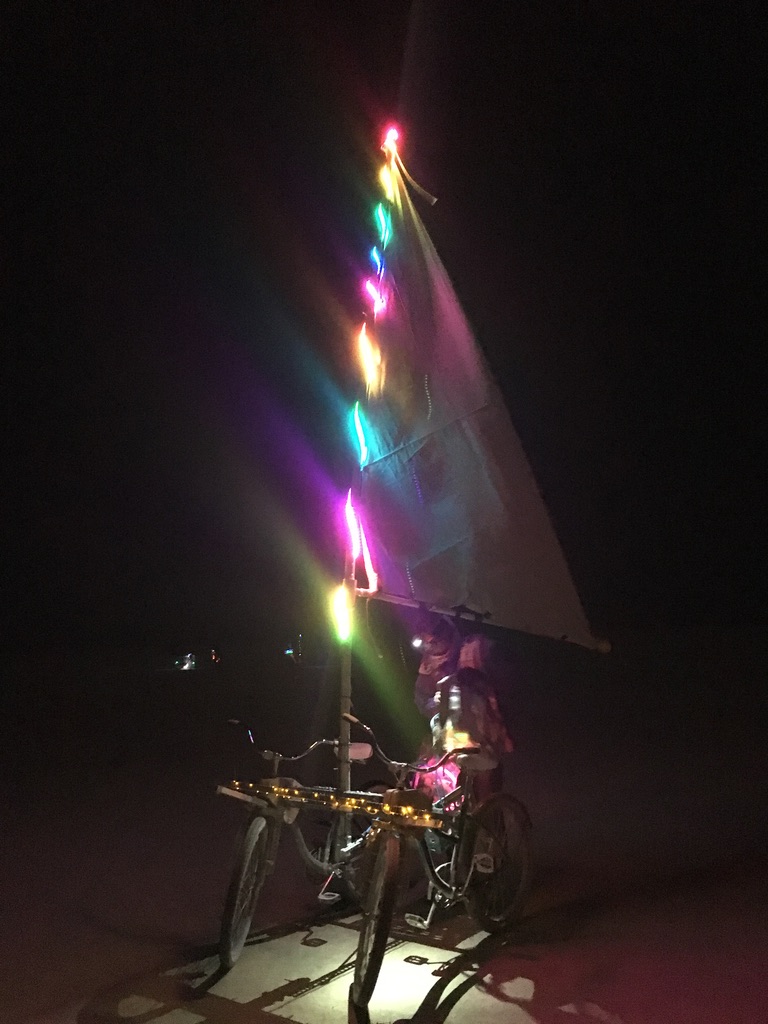
Despite some of the hasty last-minute decisions, it was a joy to ride. Bicycling together while one person is steering, being able to rest on your bicycle seat, having a small storage box to hold backpacks, was all incredibly enjoyable.
We were also successfully able to sail the bicycle; there was one whiteout duststorm where I was sure that we were consistently going more than 30mph. We often kept the sail wrapped around the mast, however.
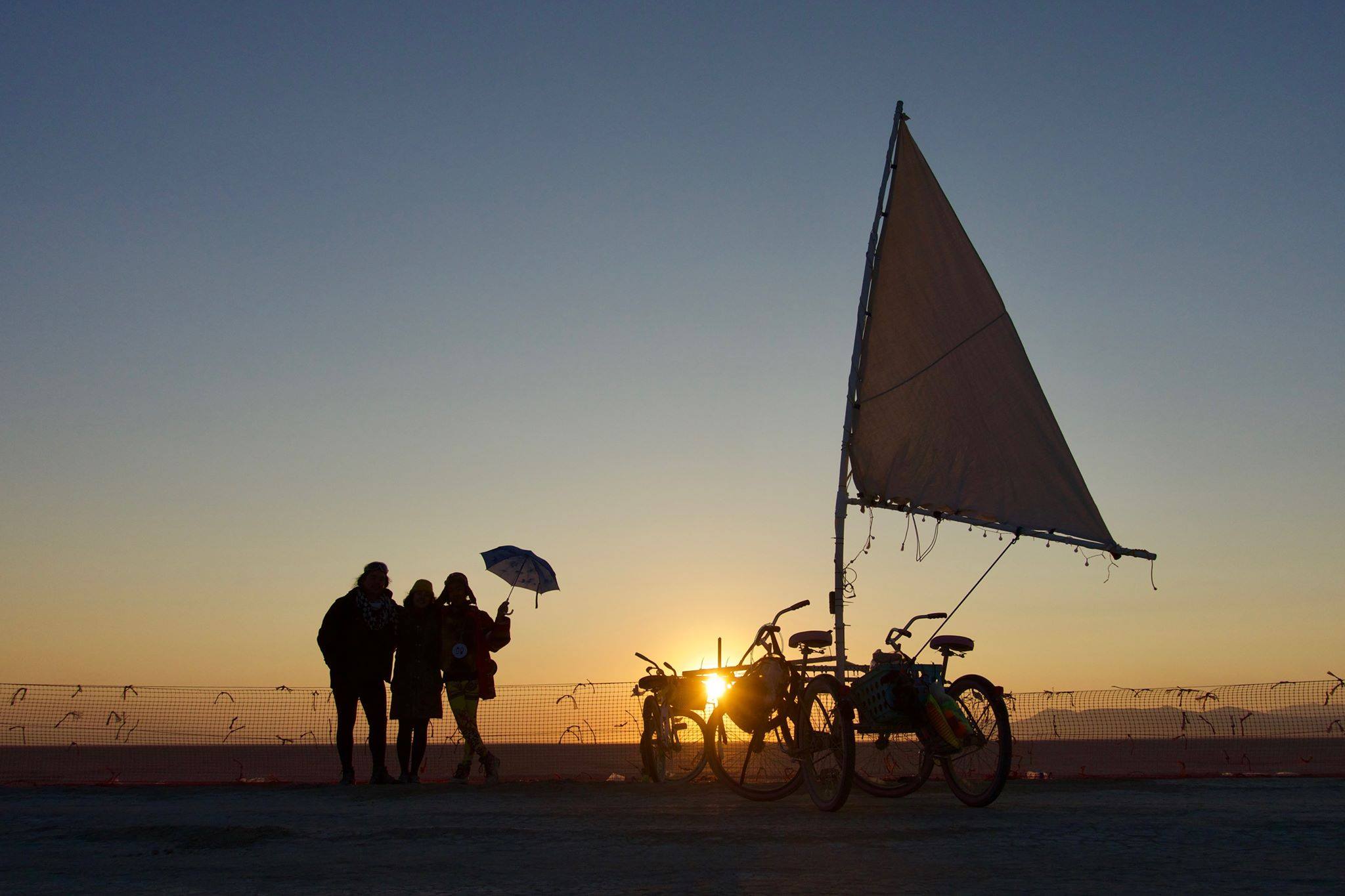
More than anything, the experience of having a small mutant bicycle was a fascinating experience on the playa; it very much shaped our engagement with people. To have built anything and brought it out there was a representation of effort and interest, and to some extent I think people appreciated the scrappy ingenuity of the bicycle, especially once we explained the constraint around shipping the quadricycle parts.
In many ways, this was the year that I really understood Burning Man as an expressive medium for a certain scale of scrappy, earnest personal projects.
--
It's always difficult to describe Burning Man to people, especially it seems to be changing each year. Sometimes I like to think of it as a kind of botanical garden, or jungle, where individual tendencies are encouraged to flourish and grow in strange, idiosyncratic ways, a kind of full expression of one's interiority. Magic emerges when this ever-continuing apotheosis is complete.
Currently the bicycle is stored in a storage unit, and I'm not sure what to do with it. In many ways, it's a time capsule of a moment in my life. One day, perhaps, I'll learn how to weld, and cut up the bicycle into a different type of social bicycle, and bring it out to the playa again.